
On January 1, 2022 the public domain expanded in the United States to include works published in 1926. This is only the fourth expansion of the US public domain since 1998, when the Sonny Bono Copyright Term Extension Act (External link) increased the copyright term and suspended annual public domain expansions for 20 years. Starting in 2019, the US public domain once again began to shift incrementally by one year each January 1st. To celebrate this year’s expansion, HathiTrust created a collection of over 54,000 volumes from 1926 (External link) that are now in full view to everyone in the United States. (Many are also accessible worldwide). For global readers, HathiTrust has created a collection of worldwide public domain content – Newly Opened Worldwide January 2022 (External link) – that includes all 40,000+ HathiTrust volumes published outside the United States in 1896, as well as volumes published in Canada and Australia in 1901.

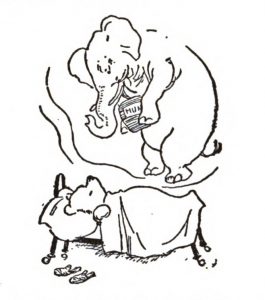
This year’s cache of newly public domain volumes is particularly rich and includes, among many popular titles, A. A. Milne’s beloved Winnie the Pooh (External link), Agatha Christie’s The Murder of Roger Ackroyd (External link) (voted the best crime novel ever by the British Crime Writer’s Association), Willa Cather’s eighth novel My Mortal Enemy (External link), and Carl Sandberg’s Pulitzer Prize- winning Abraham Lincoln, the Prairie Years (External link). In terms of poetry, Dorothy Parker’s first book of poems Enough Rope (External link) and Chilean poet Gabriela Mistral’s second book Desolación (External link) are among the abundant offerings new to the public domain. In 1945, Mistral became the first Latin American author to receive the Nobel Prize in Literature.
In 1926, the Harlem Renaissance was in full swing, particularly the literary movement that was energized by the Great Migration and Harlem’s transformation into a cultural mecca of African American political and social thought, as well as the arts. That year, Langston Hughes published his first book of poetry The Weary Blues (External link). Brothers James Weldon Johnson and J. Rosamund Johnson published a work they compiled and edited together, The Book of American Negro Spirituals (volumes 1 (External link) and 2 (External link)), which included additional music by jazz trombonist Lawrence Brown. Both brothers were active writers in the Harlem Renaissance, and James Weldon Johnson was the head of the NAACP from 1920 to 1930.
A number of now available journals showcase writers of the Harlem Renaissance. These include The Messenger (External link), a Harlem based magazine that started as a socialist publication in 1917, but later became an influential literary magazine. Wallace Thurman was a contributing editor of the 1926 edition and helped publish Zora Neale Hurston’s “The Eatonville Anthology (External link)” as well as poems by Langston Hugues. That edition also features drama critic Theophilus Lewis’ review (External link) of “The Weary Blues” and poems (External link) by Georgia Douglas Johnson. Jessie Redmon Fauset was the literary editor of the NAACP magazine The Crisis (External link) from 1919 through 1926. Founded in 1910 by W. E. B. Du Bois, the Crisis is the oldest black-oriented magazine in the world. Volume 30 (External link) (actually published in 1925 but due to a cataloging issue was opened with the 1926 public domain) features a travel piece (External link) by Fauset and a poem (External link) by playwright Georgia Douglas Johnson. Also, in 1926, Wallace Thurman collaborated with Zora Neale Hurston, Gwendolyn Bennet, Langston Hughes and others to create the short-lived but important literary journal (Fire!! (A Quarterly Devoted to Younger Negro Artists) (External link)) that features Hurston’s short story “Sweat (External link),” Bennet’s “Wedding Day, a Story (External link),” drawings (External link) by Aaron Douglas, and the first part of “Smoke, Lilies, and Jade (External link)” by Richard Bruce Nugent.
Many writers published in 1926 are considered part of the modernist literary movement, characterized by the desire to break free of traditional literary forms to create something new that could capture the realities of the turbulent times of the early 20th century. These writers include (among many) D. H. Lawrence (multiple stories and a play (External link)), F. Scott Fitzgerald (a book of stories, All the Sad Young Men (External link)), William Faulkner (first novel, Soldier’s Pay (External link)), Franz Kafka (novel Das Schloss [The Castle] (External link), completed after his death), and the poet H.D. (Palimpsest (External link) and H.D. [The Pamphlet Poets] (External link)).
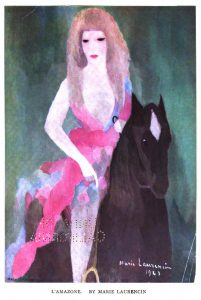
In addition to monographs, journals and serials published in 1926 are also now in the public domain, including editions from that year of two modernist literary journals: The New Criterion, vol IV (External link) and The Dial volumes 80 (External link) and 81 (External link). T.S. Eliot edited The New Criterion, and this newly available volume features essays by him (“The Idea of a Literary Review (External link)”) and Virginia Woolf (“On Being Ill (External link)”). Volume 80 of The Dial was edited by Scofield Thayer and features poems (External link) by E.E. Cummings and prose poems (External link) by Rainer Maria Rilke. Marianne Moore edited volume 81 of The Dial and published one of her own book reviews (External link), the poem “Struggle of Wings (External link)” by William Carlos Willaims, “Glad Ghosts (External link)” stories by D. H. Lawrence, and “Disorder and Early Sorrow (External link)” by Thomas Mann.
Access to important works like those named above, as well as tens of thousands of others, makes public domain expansion something to celebrate each year. When works are released from the restraints of copyright, they may be freely copied and shared online (or offline) for any purpose. They may be used to create derivative works such as plays, novels, or song lyrics. They may be translated or transformed into something new without worry of infringement. Permission is never required for the use of public domain materials, just creativity, imagination, and innovation.
For More Information
- At Long Last… The Public Domain Expands (External link) (CDLInfo, January 2019)
- UC & HathiTrust Celebrate Public Domain Day 2020 (External link) (CDLInfo, January 2020)
- Public Domain Day 2022: Trespassers Will (External link) (Everybody’s Libraries, January 2022)
- Get to Know the Territory: Musicals Based on Public Domain Works (External link) (US Copyright Blog, January 2022)